
The Context
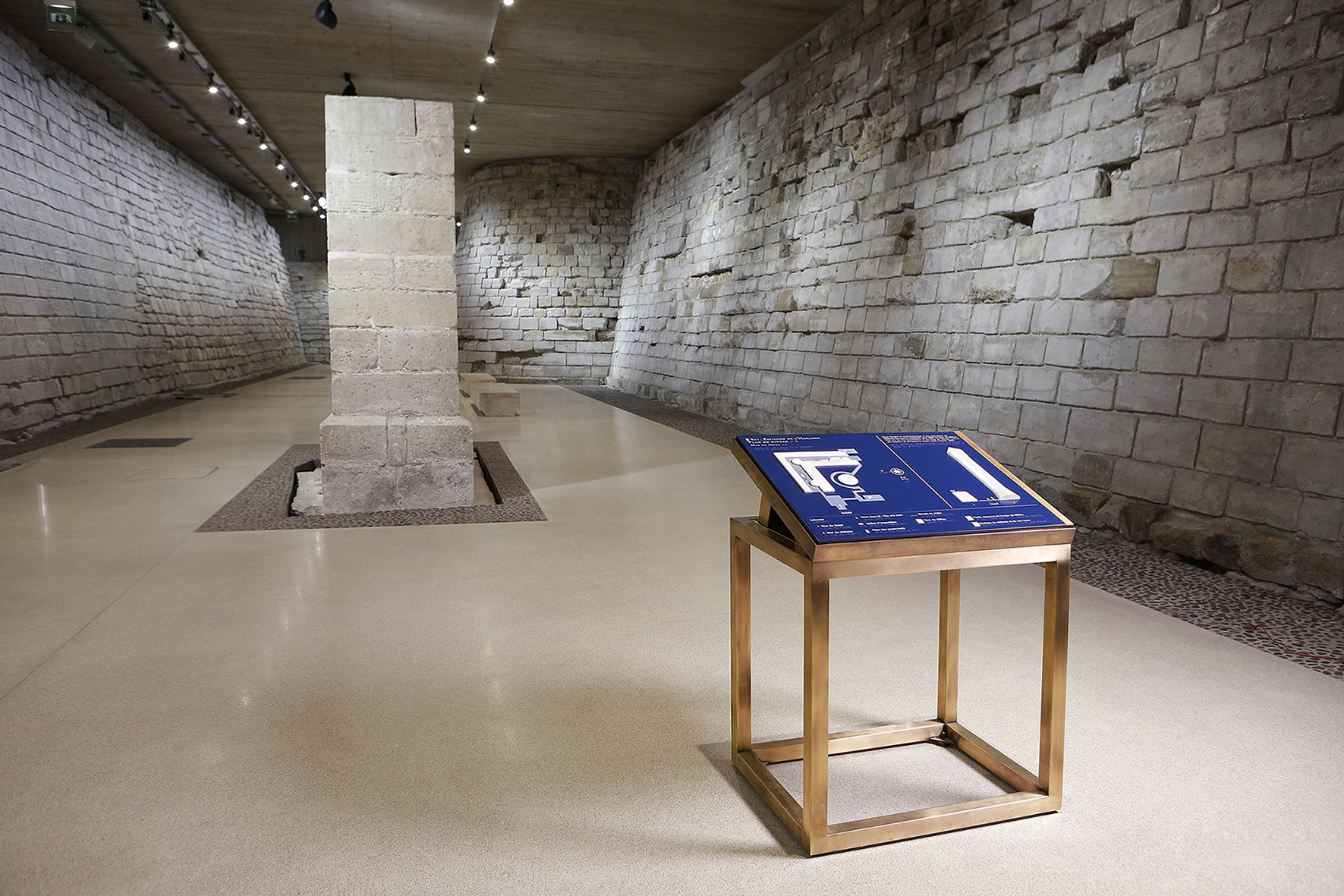
The Louvre is the most visited museum in the world. Every year, a large number of people appreciate its collections as they have the opportunity to retrace art history from Ancient Greece to the nineteenth century period in one single location. Among the highlights of its vast cultural offer, one exhibition stands out due to its inclusive nature: exhibited inside the Pavillon de l'Horloge, the itinerary reconstructs the architectural evolution of the former royal residence, built on the foundations of the medieval castle. This building has undergone numerous interventions over the centuries and has finally become the greatest temple of European culture.
The project
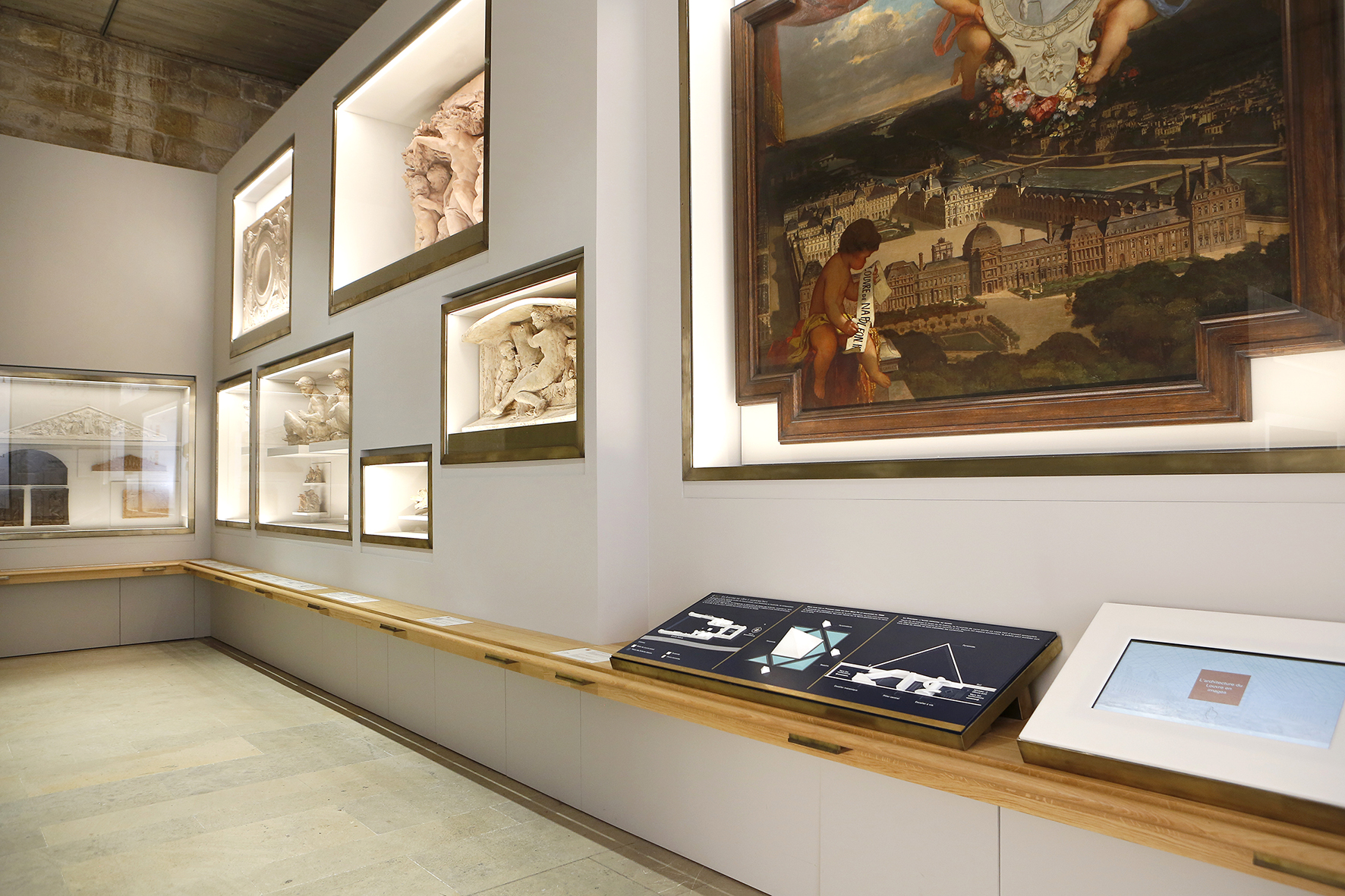
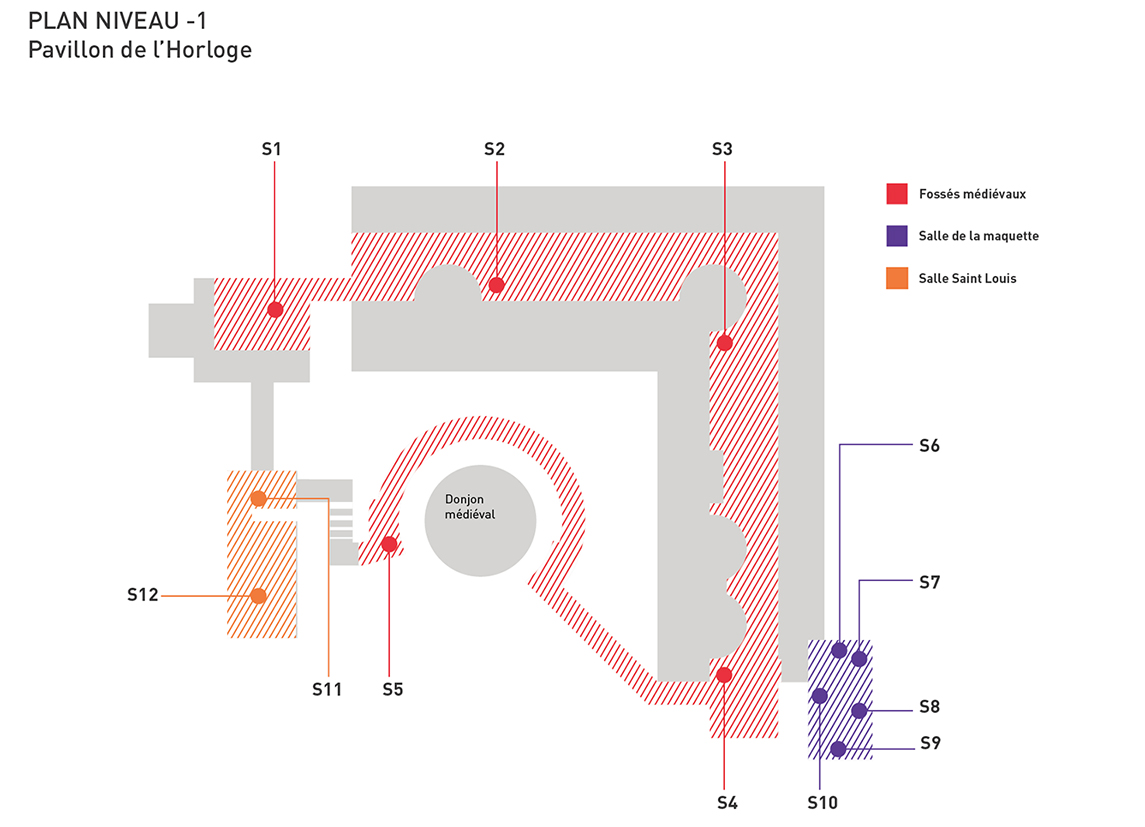
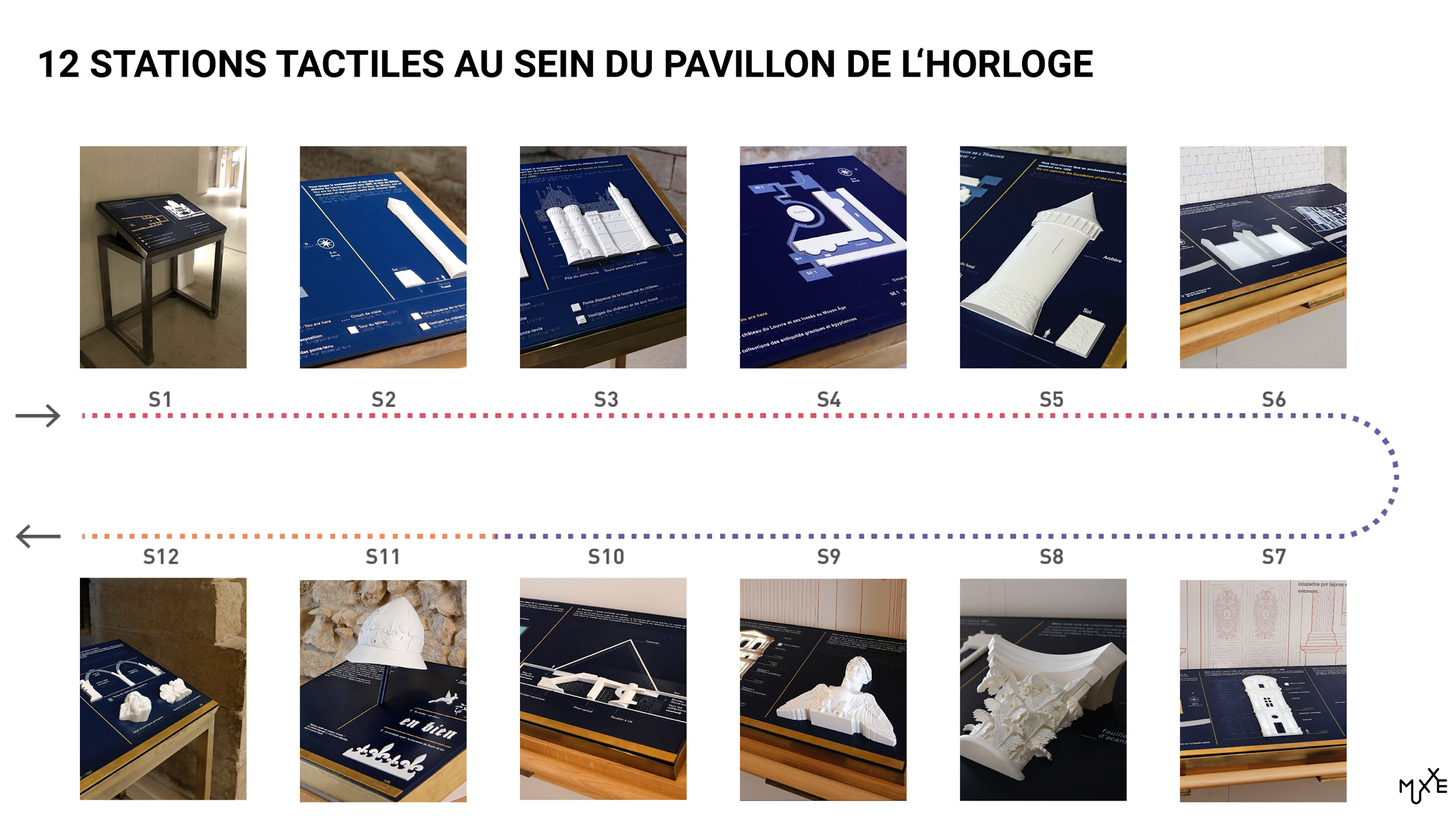
In order to make the Palace's history even more accessible and evident, the Louvre has set up twelve tactile stations. These devices, along with audio/video support, provide a multisensory learning experience that is accessible to all. Each device is made up of a metal or wood base and a panel. Similarly, each panel contains pictograms and tactile maps that remind us of a painter's canvass. The stations represent the key points of an itinerary that depict the Palace’s evolution, from the remains of the medieval castle to the completion of the famous glass and metal pyramid by Leoh Ming Pei in the 1980s.
Throughout the development phase, the design was based on the requirements of individuals who are blind or visually impaired. Their use of touch to find direction and become familiar with their surroundings is more frequent than that of people without disabilities.
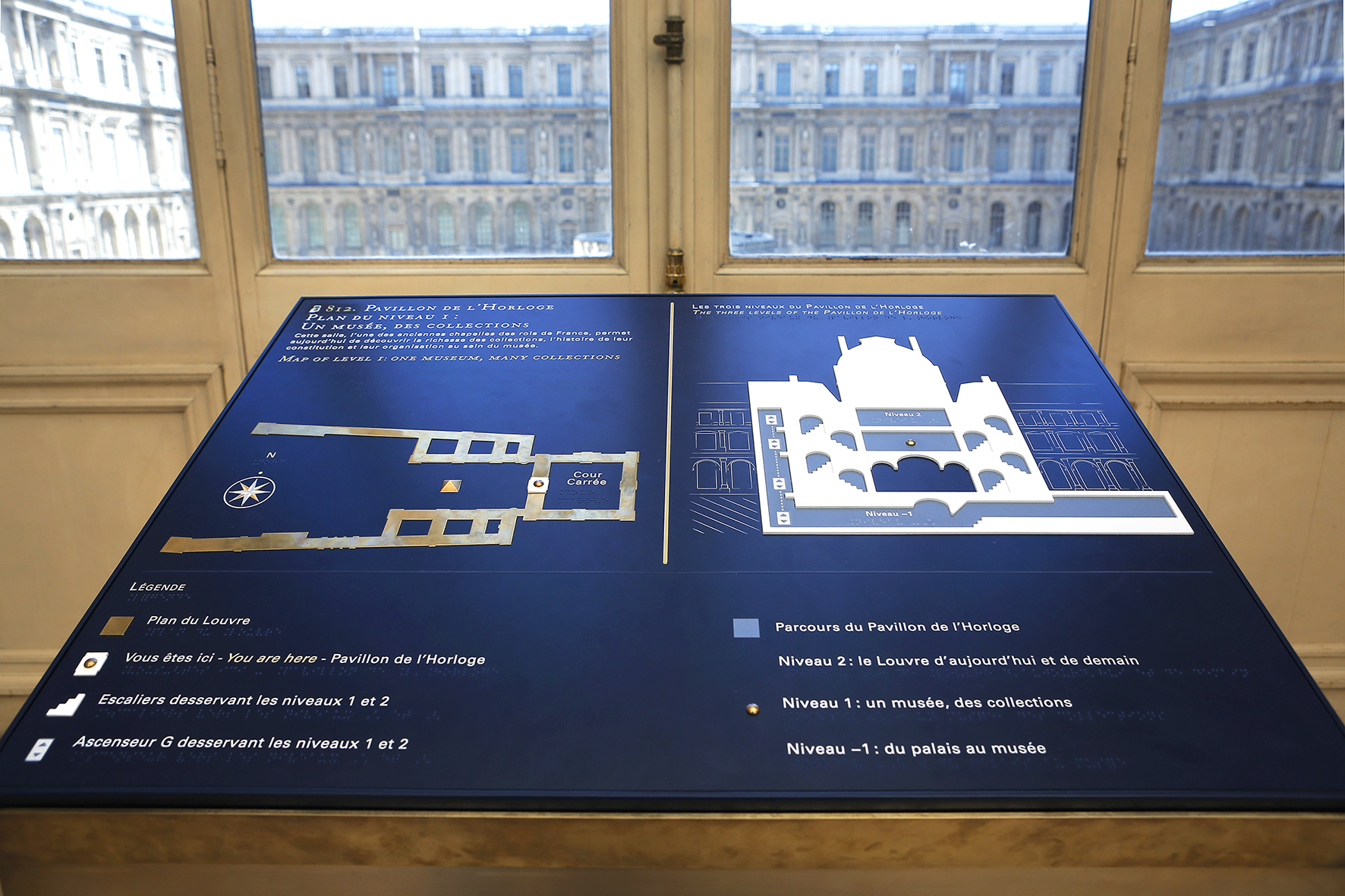
The Louvre's transformations over the centuries have been depicted in a simple and intuitive way by arranging the information on the panel according to a straightforward spatial concept.
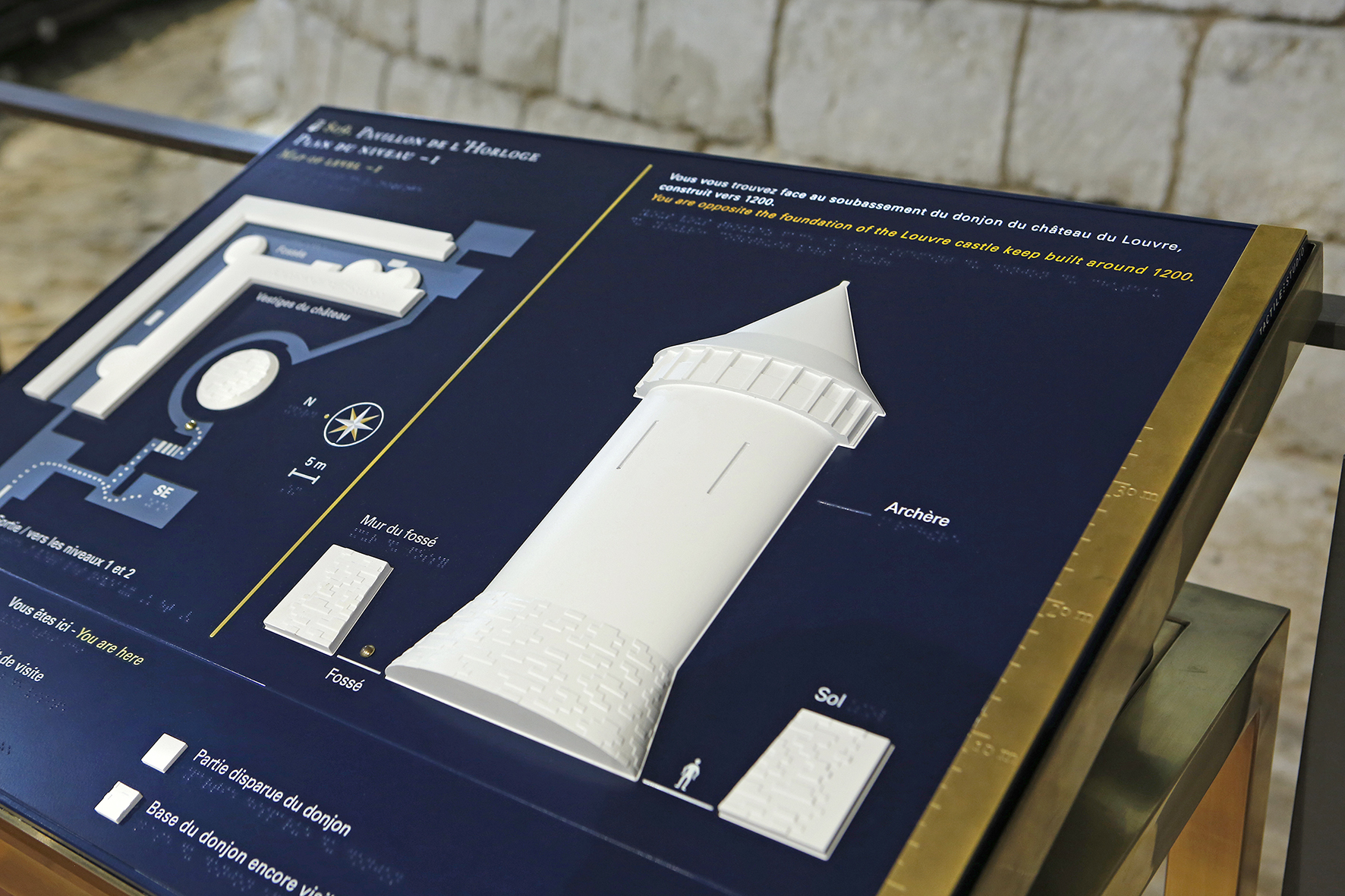
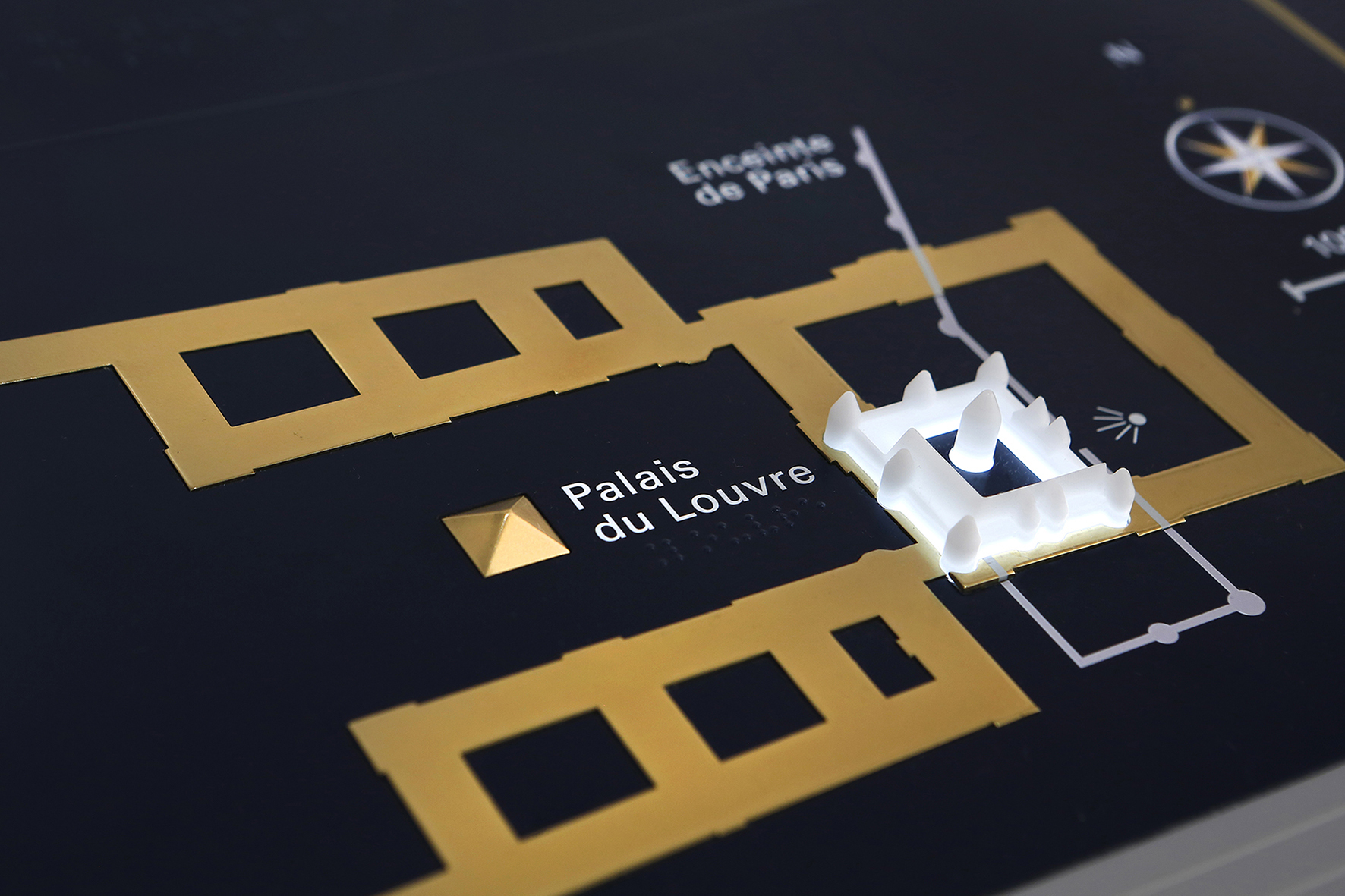
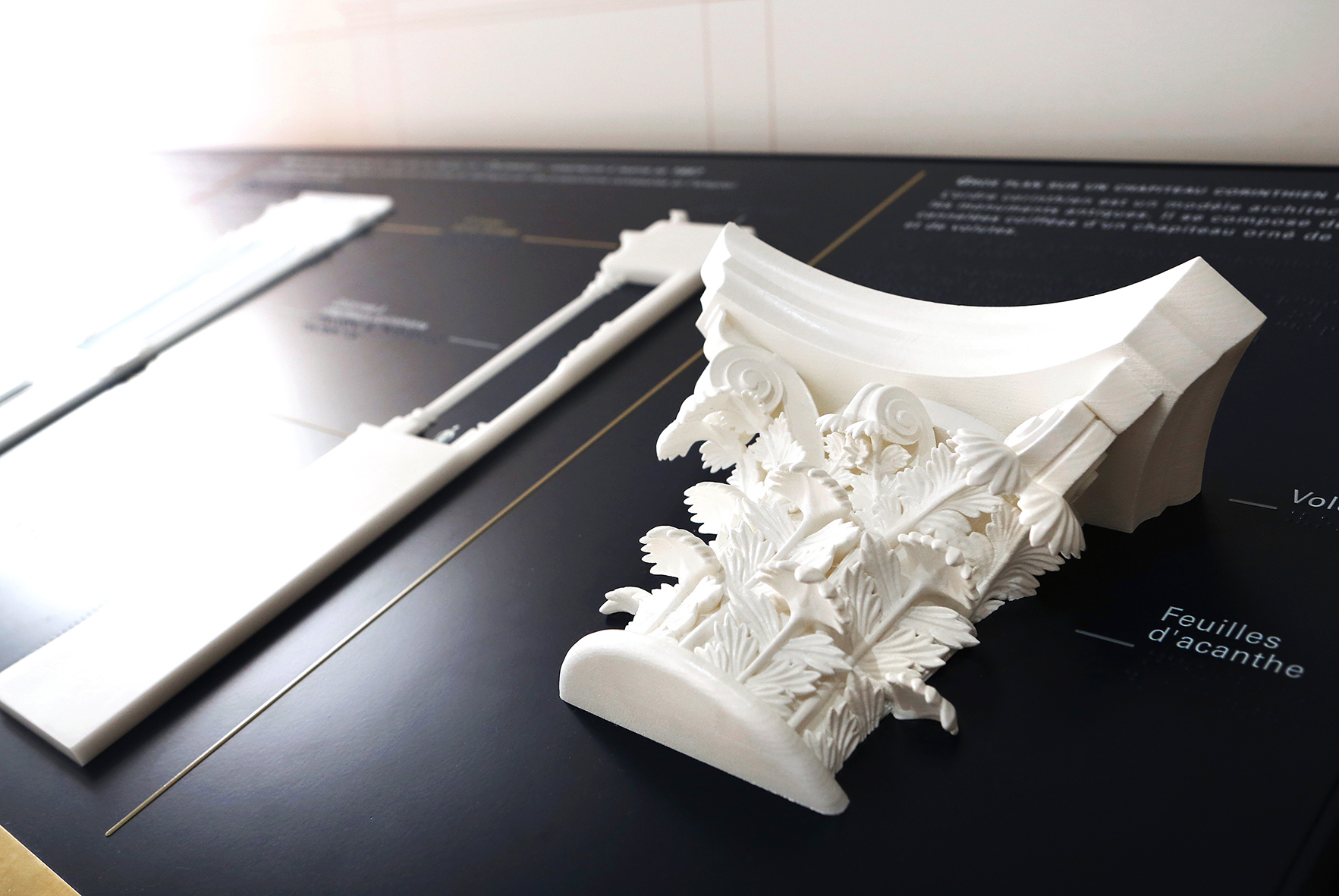
The board is frequently split into two parts, favouring a line of thinking that shifts “from universal to specific”. The first section provides tactile information "on a large scale", reproducing the building layout and indicating of the visitor’s position within the itinerary. Additionally, it outlines the Palace's changes and extensions. The second part proposes low reliefs that accurately reproduce the architectural details of the Louvre (such as the shape of the lost medieval towers or the Corinthian capitals, which nowadays still define the majestic facade).
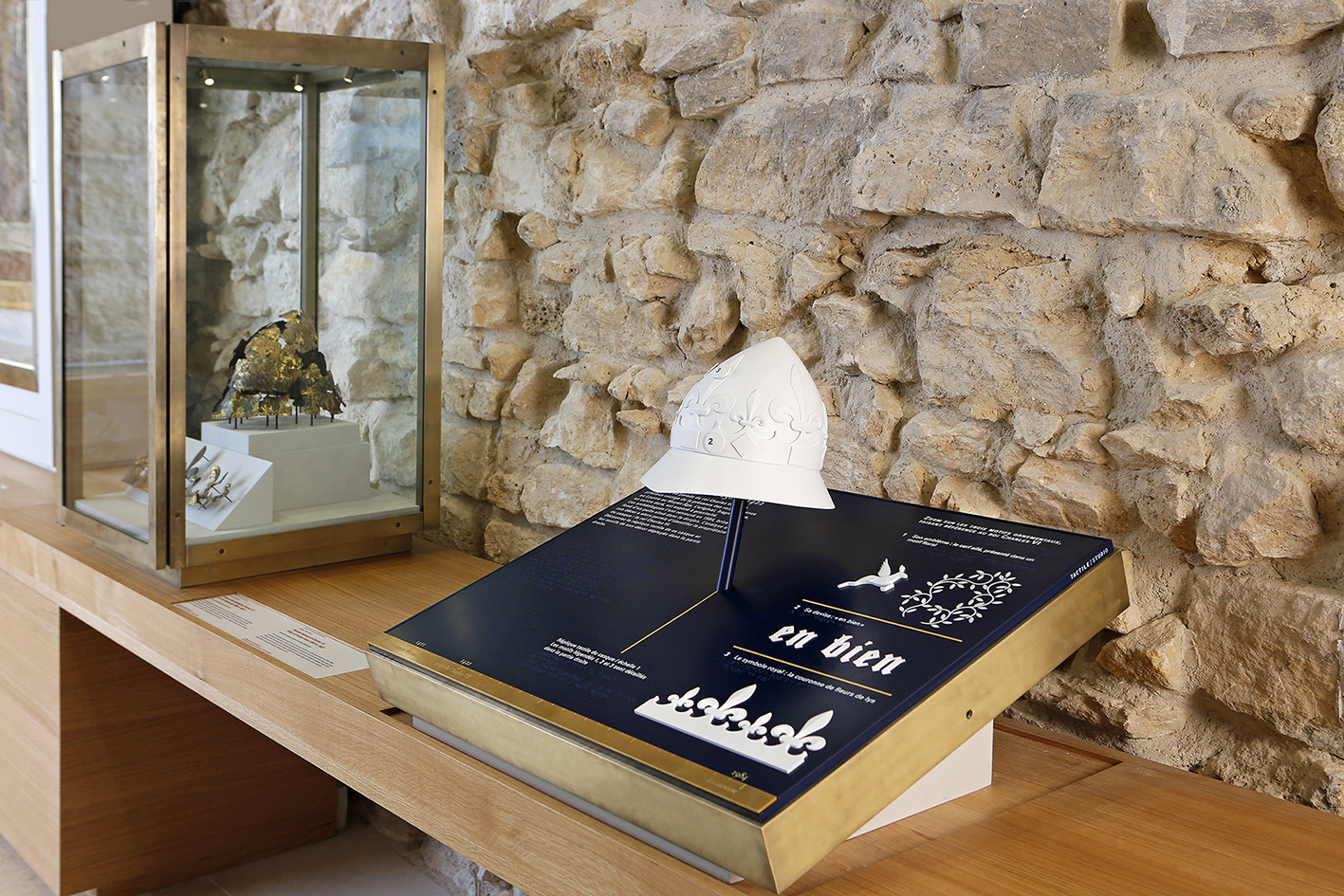
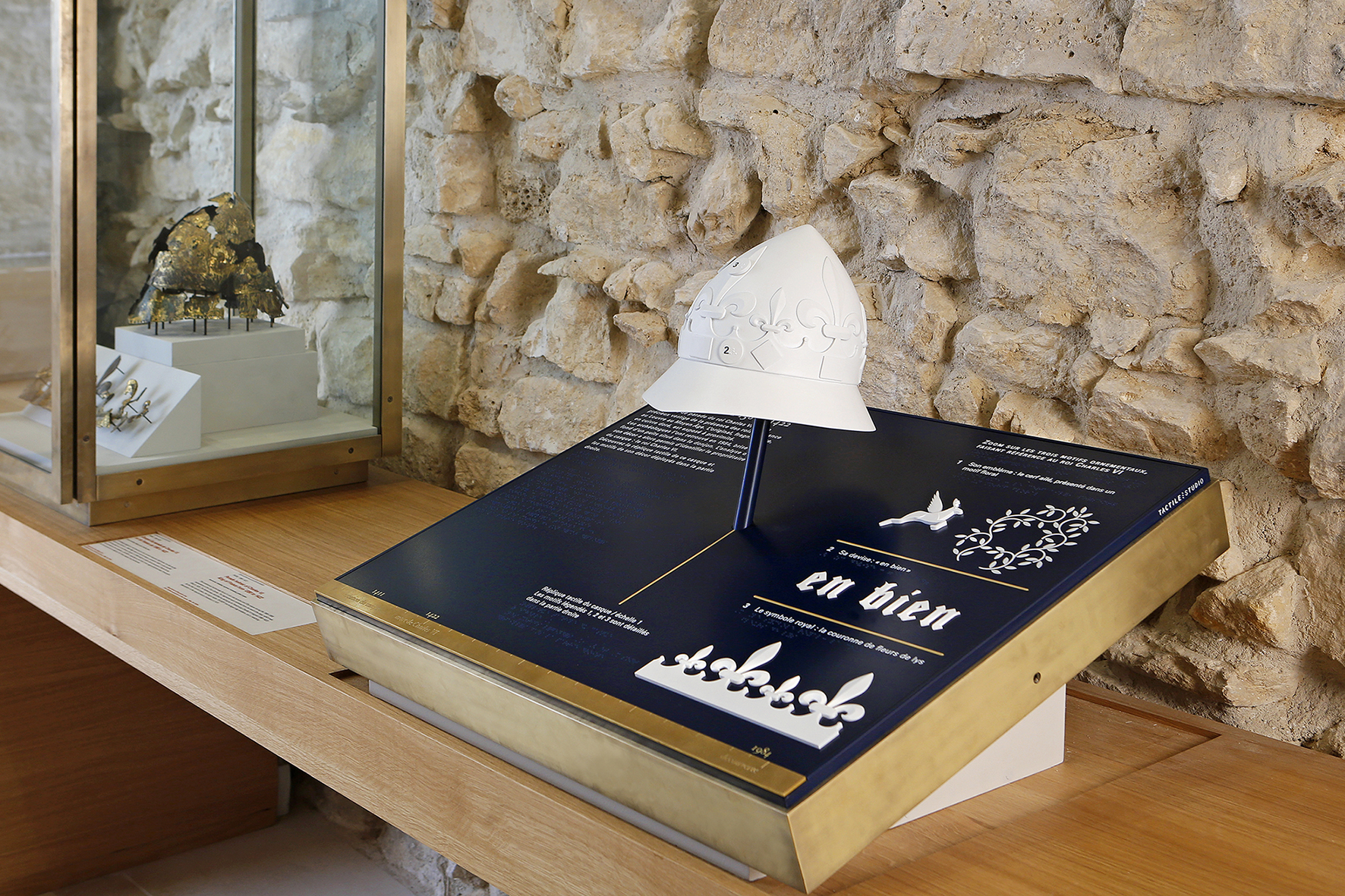
Next, ancient remains are accurately replicated in a series of stations. These tactile scale models are positioned next to the original pieces protected by glass. Such is the case of the device in the Saint Louis Hall. Here, the precious helmet that belonged to Charles VI, is reproduced in 3D print (stereolithography) and displayed on one of the exhibition panels to be seen and touched.
In design, the choice of materials and its features (smooth, rough, cold, hot, etc.) play an important role as the sense of touch is used to convey information and knowledge. The panels are composed of plexiglass and contain brass or bas-relief elements that have been integrated onto Solid Surface, an artificial material that is not porous and requires minimal maintenance.
The use of colour contrast is also essential: all panels have a blue background with white figures and tactile pictograms that stand out combined with textured and braille design.
The importance of post-evaluation
The versatility of these design products is undoubtedly what makes them so valuable. The need to provide inclusive communication for people with visual disabilities is also an opportunity to make culture accessible to a diverse audience.
Children are the primary users of this exhibition. Touch is a common way for children to learn, as they can approach art in a direct way. This type of learning experience is useful for adults who, as tourists, want to learn what the museum has to offer rapidly. Muxxe - a consultancy agency whose expertise focuses on public behaviour observation - conducted a study to determine how other user groups engage with tactile stations designed for blind and visually impaired individuals.
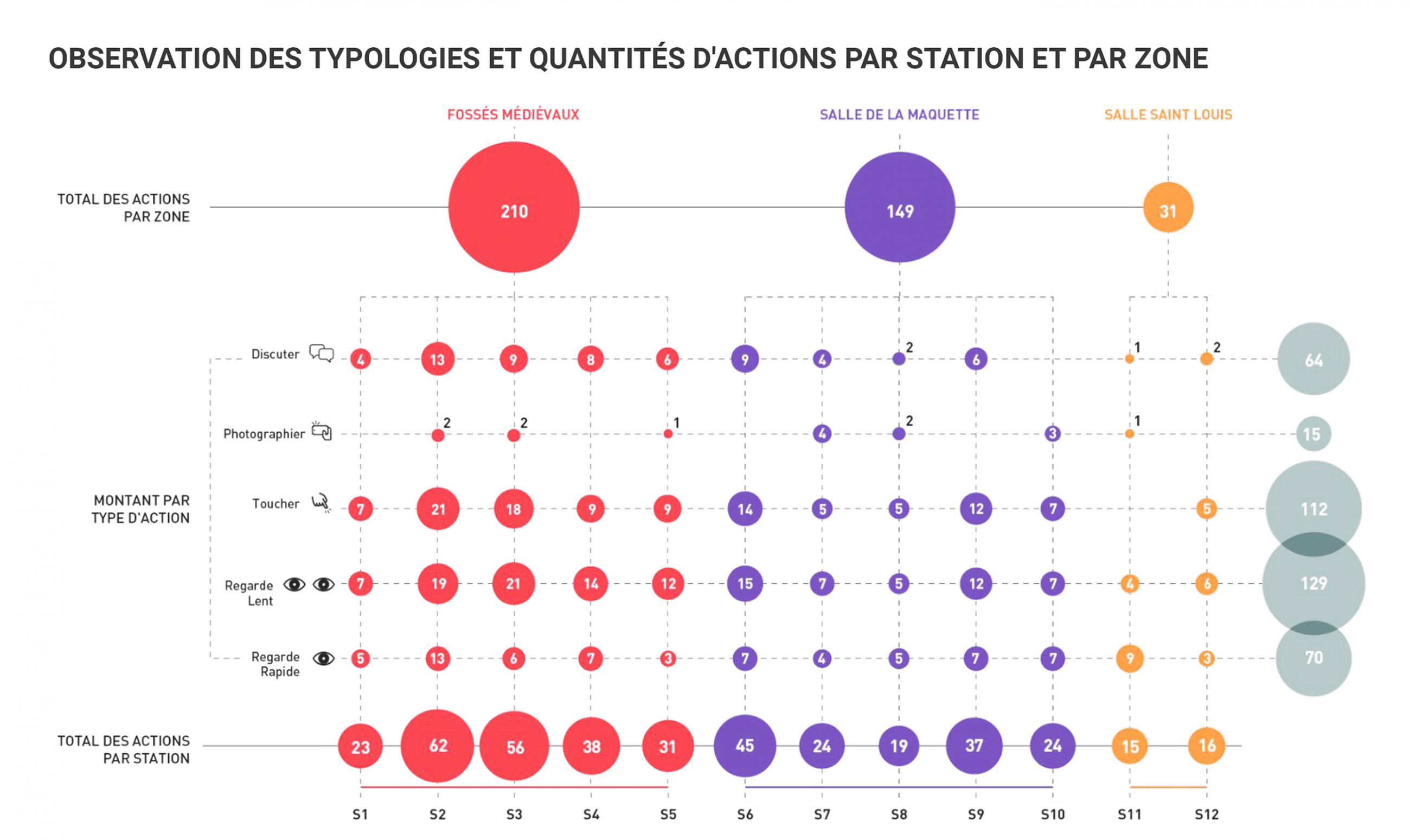
The research encompassed the exhibition at Le Pavillon de l'Horloge and the recording of quantity and quality of interactions (photographing, touching, watching) so as to understand the way visitors interacted with tactile stations.
The results demonstrated that inclusive stations piqued the interest of both visitors with and without visual disabilities. Furthermore, inclusive devices draw the attention of a group of visitors. The interactions with touch devices are comparatively longer than those with digital devices.
The aforementioned research highlights the importance of evaluating projects retrospectively in the Design for All process. The objective of such a survey is to understand whether the actions taken reflect the original intentions of the project and the inputs received during the participatory phase of developing plans.
General design guidelines (Swiss technical regulations)
According to SIA 500 and SN 640 852
- Tactile information with visual function: it must ensure a height of the relief at least 1 mm, preferably with cuneiform/wedge-shape contour; font size min. 15 mm.
- Tactile information without visual function: it should preferably ensure a height of at least 1 mm and a wedge-shaped profile; font size 15-18 mm, spaced font; no decorative fonts or characters; tactile reading possible in ergonomic position.
- Safety and orientation: natural and artificial light sources should be arranged appropriately. Avoid glare and reflections; contrasts of brightness and colour should facilitate directions and safety of mobility. Contrasts or colour patterns must not cause optical illusions.
Text by Caterina Cavo